

Fences you draw. Animals you can find.
Grazova puts the fence on the collar and the record in the app. Here’s how a farm gets set up, what an animal hears at the line, and what the crew sees afterwards.
Four jobs, then the herd goes out.
- 01
Put up the base station.
Mount it on the barn, the house or a pole with a clear view across your pastures, and connect it to the farm’s internet.
- 02
Fit the collars.
Pair each collar with your phone at the gate and give it the animal’s tag number. Group animals the way you run them.
- 03
Draw your pastures.
Trace boundaries, strips and keep-out zones on the map, using the names your crew already uses.
- 04
Train with the fence standing.
Turn the herd out inside a physical fence with the virtual line set just inside it. Animals learn that the tone means turn around.
What an animal hears, and when it stops.
Sound comes first. A pulse follows only if an animal keeps walking toward the line, and the collar goes quiet once it’s beyond it, so nothing pushes an animal further from home.
- 1
Inside the pasture
No cues. The collar reports its position and stays quiet.
- 2
Tone zone
A tone plays as the animal walks toward the line. Turning back stops it.
- 3
The line
If the animal keeps going, a short, mild pulse follows the tone.
- 4
Beyond it
Cues stop, so the animal is never pushed further away. The crew gets an alert, and the animal can walk back in with no cue.
Keep them in, move them on, keep them out.
Pasture
A boundary to stay inside. Draw it once and send the herd in, or keep a set of pastures to rotate through.
Strip
A fresh section of a pasture that moves forward, on the spot or on a schedule, with the grazed ground closed behind it.
Keep-out zone
A place to stay out of inside a pasture: a pond, a creek bank, a wet corner, the orchard or the garden.
The crew hears about it first.
Alerts go to the people you choose. Each one names the animal, the pasture and the time of the report, and opens the animal’s last reported location.
Outside its pasture
Tag 117
West meadow
Reported outside today at 8:15 am
No recent report
Tag 088
Creek pasture
Last reported yesterday at 6:40 pm
Battery low
Tag 203
North pasture
Battery at 15% at 7:10 am
Strip opened
Strip 5
North pasture
Opened on schedule at 6:00 am
Example alerts. Tags, pastures and times are illustrative.
Sound first, every time.
Virtual fencing works when animals learn the tone and rarely need anything more. The collar is built around that.
- No cues inside the pasture.
- Sound first, every time.
- A pulse only after the tone, and only while the animal keeps walking toward the line.
- No cues beyond the line.
- Every cue is logged, so you can see how each animal is learning.
Notes for small flocks and goat herds.
Most virtual fences are built for big cattle herds. These are the things we plan for on smaller ground.
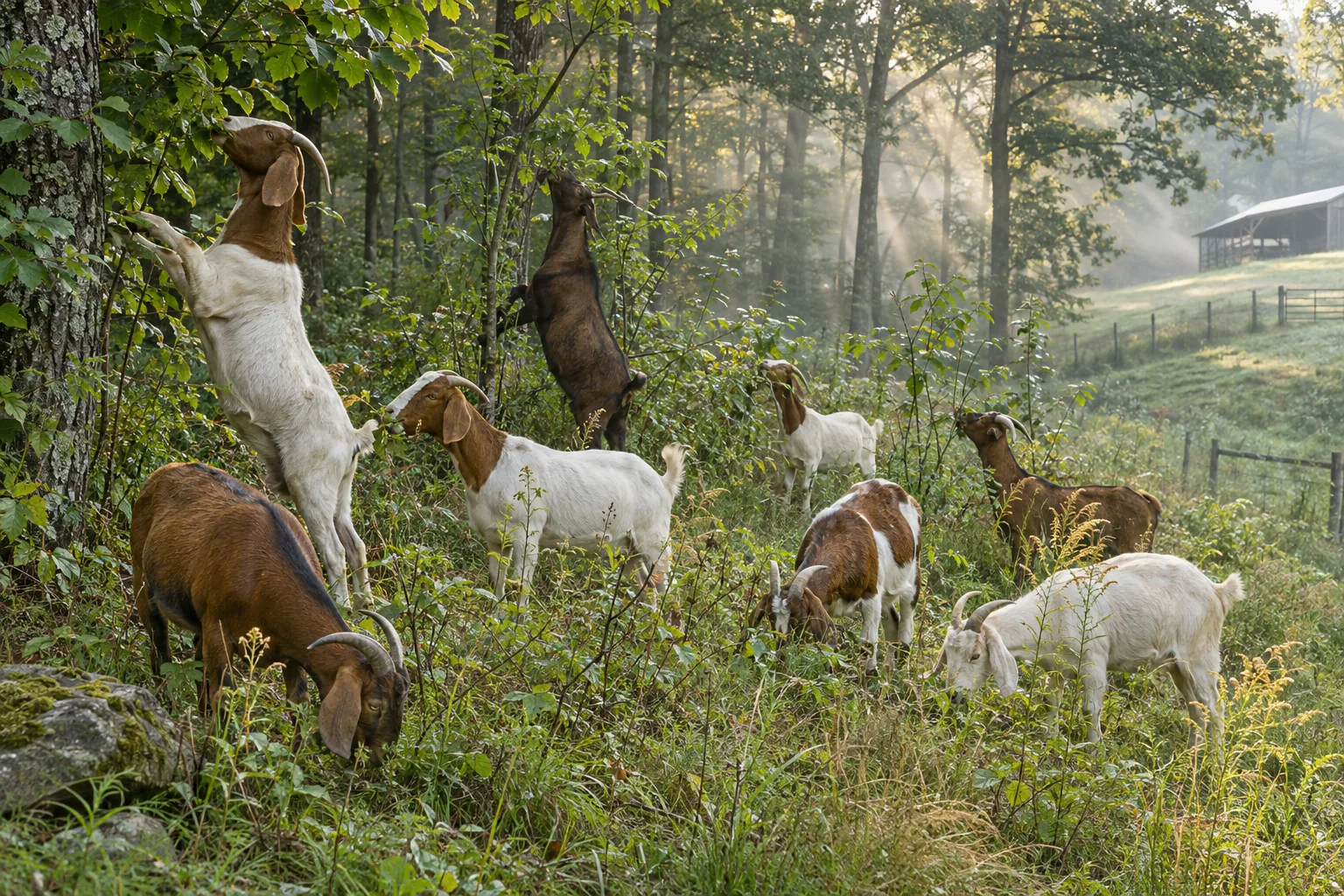
Goats test fences.
Give a goat herd a longer training period with the physical fence standing, and set the virtual line well inside it.
Lambs and kids don’t hear the tone.
Only collared animals are cued. Keep uncollared young stock where a physical fence backs up the line.
Predators can scatter any flock.
A frightened animal can run through a fence, physical or virtual. Once it’s beyond the line, cues stop and you get its last reported position.
Brush and woodland slow GPS down.
Heavy tree cover can delay a position fix. The collar keeps its fence and reports again as soon as it has one.
Questions from the gate.
Which animals does Grazova work with?
How many collars do I need?
Do I need cell service in my pastures?
What happens if an animal crosses the line?
Is it kind to the animals?
Should I keep my perimeter fence?
Can I track equipment too?
When can I get Grazova, and what will it cost?

Bring Grazova to your ground.
Tell us about your herd, your pastures and your coverage. We’re lining up the first farms to run Grazova and will be in touch when collars are ready for yours.